Tuesday, May 12, 2009

5 Years of Central Europe in the EU

The European Commission published a study summarizing the economic effects of the historic 2004 EU enlargement. The main findings say that:
  • the accession process has contributed to significantly improve living standards in the new Member States, [...]
  • rapid trade integration has fostered a more efficient division of labor and strengthened competitiveness in the EU
  • investments from old Member States have been a key driver of economic transformation in the new Member States
  • new investment opportunities created by enlargement helped enterprises in the old Member States to strengthen their global competitiveness [...]
  • workers in the new Member States have profited from improved employment opportunities at home and abroad, [...]
  • in old Member States, concerns raised about massive labor migration prior to enlargement have not materialized
During the five years, Central Europe has proceeded to gain freedom in labor movement, typical for full EU membership. Restrictions to free movement of labor now remain only in Germany and Austria. The countries acceded to the Schengen area of free borders and won visa waiver for traveling to the United States. In addition, Slovakia joined the Eurozone in January this year.
Local economies experienced a swift growth in 2004-8. Regional average GDP per capita increased from 61.5% of the EU average in 2004 to 67.7% four years later (arithmetic average of V4 countries). Population in V4 stayed stagnant - at 63.9-64.0 million. The number of inhabitants grew noticebly only in the Czech Republic (from 10.2 to current 10.5 million). The EU27's total population is expected to reach 500 million sometime later this year.

Sunday, May 10, 2009

Bratislava Public Transportation in Three Countries

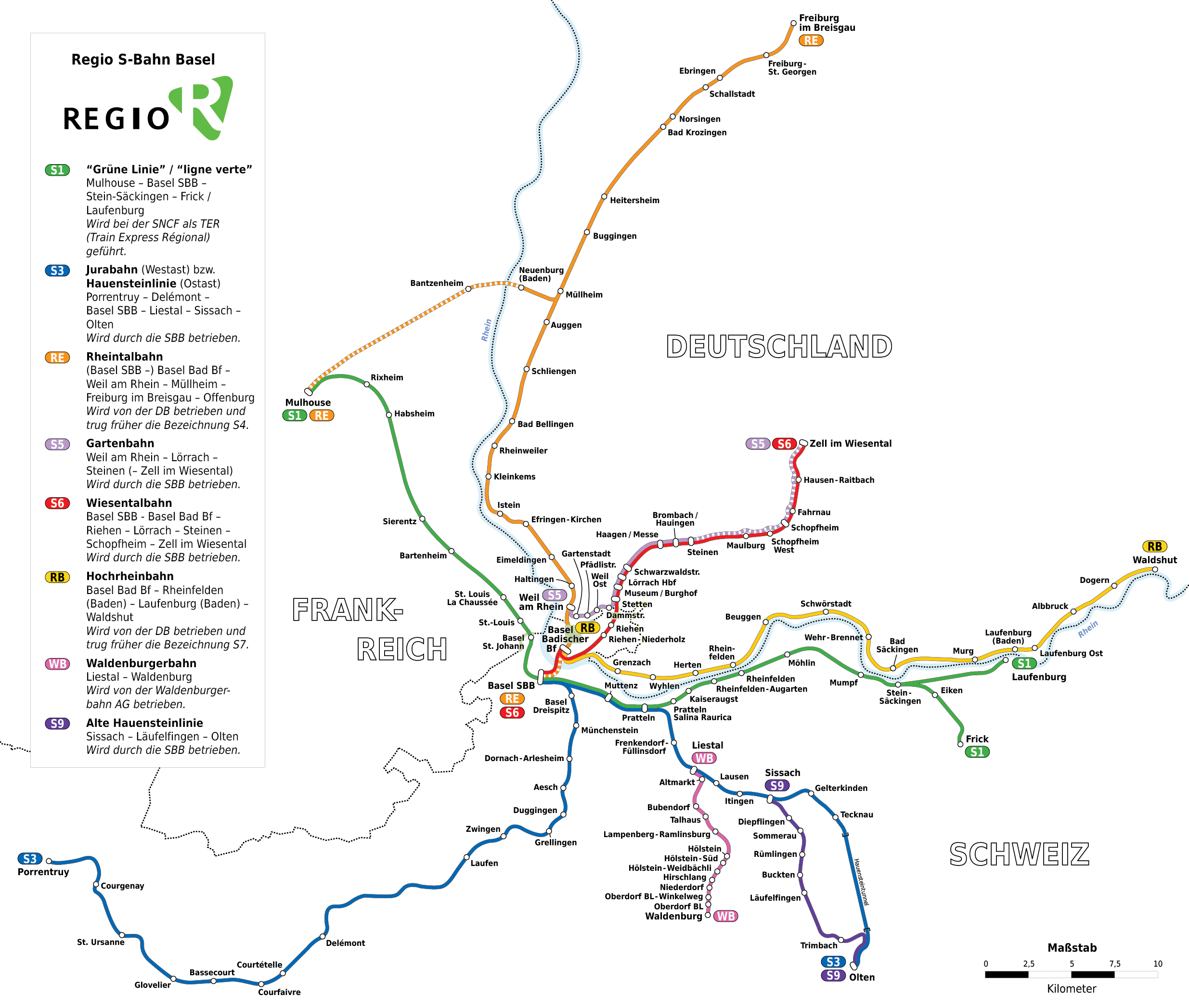
From September on, Bratislava system of public transportation will span three countries. Apart from Slovakia, local buses operate a line to Austrian town of Hainburg an der Donau and a border village Wolfsthal. Later this year, the EU funds will pay for most of the costs of another line to Hunagrian village of Rajka, where many Slovaks moved during the last year or two. This development owes to the Schengen system of free movement across most of EU borders. Apart from Bratislava, only Swiss Basel public transportation is known to the author to service two other countries (France and Germany) apart from its homeland.

Monday, April 27, 2009

Czecho-Slovakia's Revival at the IMF, WB

The Czech Republic and Slovakia signed an agreement on joint representation at the International Monetary Fund (IMF) and the World Bank. Sixteen years after the two republics peacefully split, the two states will have only one representative in the IMF (a Slovak), and one (a Czech) at the World Bank. After four years, this composition will switch. The agreement aiming at cost saving has been signed by the Czech and Slovak representatives in Washington, D.C. (read ČTK's report)

Sunday, April 12, 2009

Falling By How Much?

Revisions of macroeconomic forecasts bring worse and worse predictions for the V4 economies. The latest prediction of the National Bank of Slovakia expects local GDP to shrink by 2.4%. Last year, Slovak economy expanded by 6.4%.
Hungarian authorities already calculate with a recession of 5.5-6.0% in this most-hit Central-European country (majority of analysts expected 4-5% decline).
An older (February) forecast of the Czech National Bank counts with an economic decline of only 0.3% in the Czech Republic. IMF expects -1.3%.
By the end of March, Polish central bank expected a 1.1% growth for Poland, which would make the country the only economy in the EU to grow. Similar estimate was released by The Economist Intelligence Unit (+0.9%).
A good portrayal of the current state in the local automotive sector, one of the leading and most-hit industries, can be found at businessnewseurope.

Monday, March 16, 2009

The Economist's Portrayal of CEE

(from The Economist print edition, February 12, 2009)

"A picture worth 163 words

SIR – Given your newspaper’s determination to accompany any article on social or political affairs in eastern Europe with a photograph of the apparently ubiquitous old lady with a shawl wrapped over her head, I was delighted to find that your recent piece on the gas crisis in the region (“Gasping for gas”, January 17th) carried a picture representative of another important demographic group: the dentally challenged villager. My excitement was short-lived, however, as just a week later it was back to the well-wrapped old lady (“To the barricades”, January 24th). One gets the impression from your coverage of elections that every polling station east of the Danube is populated solely by such characters.

To avoid creating any misleading stereotypes, may I suggest that you widen your range of imagery to better represent east Europeans. Roma using horse-drawn carts on main roads, elderly veterans in Soviet-style uniforms and furry hats and vodka-soaked vagrants would broaden the picture.

Daniel Tilles
Cracow, Poland"

Wednesday, March 11, 2009

Average Wages under Exchange Rate Pressure

Average monthly wages in Visegrád Four (V4) countries expressed in terms of Euro values suffered from exchange rate devaluation during the last quarter of 2008. Yet, only Polish wages decreased in Euro-terms compared to the previous quarter. Slovakia, a fresh member of the Eurozone, did not experience an exchange rate depreciation thanks to its set conversion rate. The country's average Euro wage has doubled during the last four years. (More information in updated TREND Analyses' macropresentation.)

Monday, March 9, 2009

CEE is not a Monolithic Region

Say the Czechs in The Prague Post. The article cites loan-to-deposit ratios, which are around 80% in the Czech Republic and Slovakia, but 130% in Romania and as much as 200% in Estonia. In addition, Erste group maintains that the region is less exposed to the credit crisis than the numbers of Bank for International Settlements say (BIS mentions Western exposure of $1.4 trillion).

Thursday, March 5, 2009

New Research Papers by Ľuboš Pástor

Possibly the most prominent Slovak economic scholar, Prof. Ľuboš Pástor from the University of Chicago, is currently working on two projects included in recent NBER working papers. One of them deals with the process of learning in financial markets, and will be soon reviewed for this blog by our colleague František Lipták. The other tries to answer the question of whether stock prices are really less volatile in the long run.

Wednesday, March 4, 2009

Hungarian Pleas for Aid Went Unheard by the EU

Slovak cartoonist Martin Šútovec nicely immortalized the occasion in his recent caricature. Hungarian portal Magyar Hírlap took the picture and translated it to Hungarian. The cartoon stars Slovak Prime Minister Robert Fico, famous for stressing the value of solidarity, and Hungarian leader Ferenc Gyurcsány. Here it is:English translation: "Solidarity? Are you nuts?!?"

Thursday, February 19, 2009

Prague the 12th Most Productive Region in the EU

According to data for 2006 released by Eurostat today, Bratislava region was the nineteenth most productive of all 271 regions in the European Union. Its GDP per inhabitant in purchasing power standards amounted to 149% of the EU average. This has to do with many large companies having headquarters and major facilities in the capital city, such as automotive manufacturer Volkswagen or oil refinery Slovnaft. Czech capital Prague ranked even higher – at place number twelve – and it is the most productive region of whole Central and Eastern Europe. Other regions of Slovakia ranked much lower, since their productivity ranged from only 44% of the EU average in case of Eastern Slovakia to 63% in Western Slovakia. Regional differences in living standards are thus quite pronounced in the country. However, this is the case of many other EU member states as well, such as Italy, Germany, Spain or the UK. The poorest regions of the EU can be found in Romania, Bulgaria and Poland.